A warning light that seems harmless in a Bedford Park yard can become a much bigger headache once your truck merges onto I-55. The same goes for an intermittent fault around Melrose Park that becomes a power-loss problem near I-290 or I-294.
Those diagnostic problems rarely become cheaper or easier after the truck reaches a congested freight corridor. Catching the cause early with a professional diagnostic service gives you a better chance of keeping the vehicle on schedule instead of dealing with an unexpected derate or roadside shutdown.
Don't Treat a Fault Code as the Diagnosis
A diagnostic trouble code gives your technician a place to start. It does not automatically identify the failed part.
That distinction matters when your truck repeatedly illuminates the check-engine light, loses power occasionally, or seems normal again after you shut it down and restart it. Clearing engine fault codes without finding their cause can make the dashboard look better temporarily while the underlying problem remains.
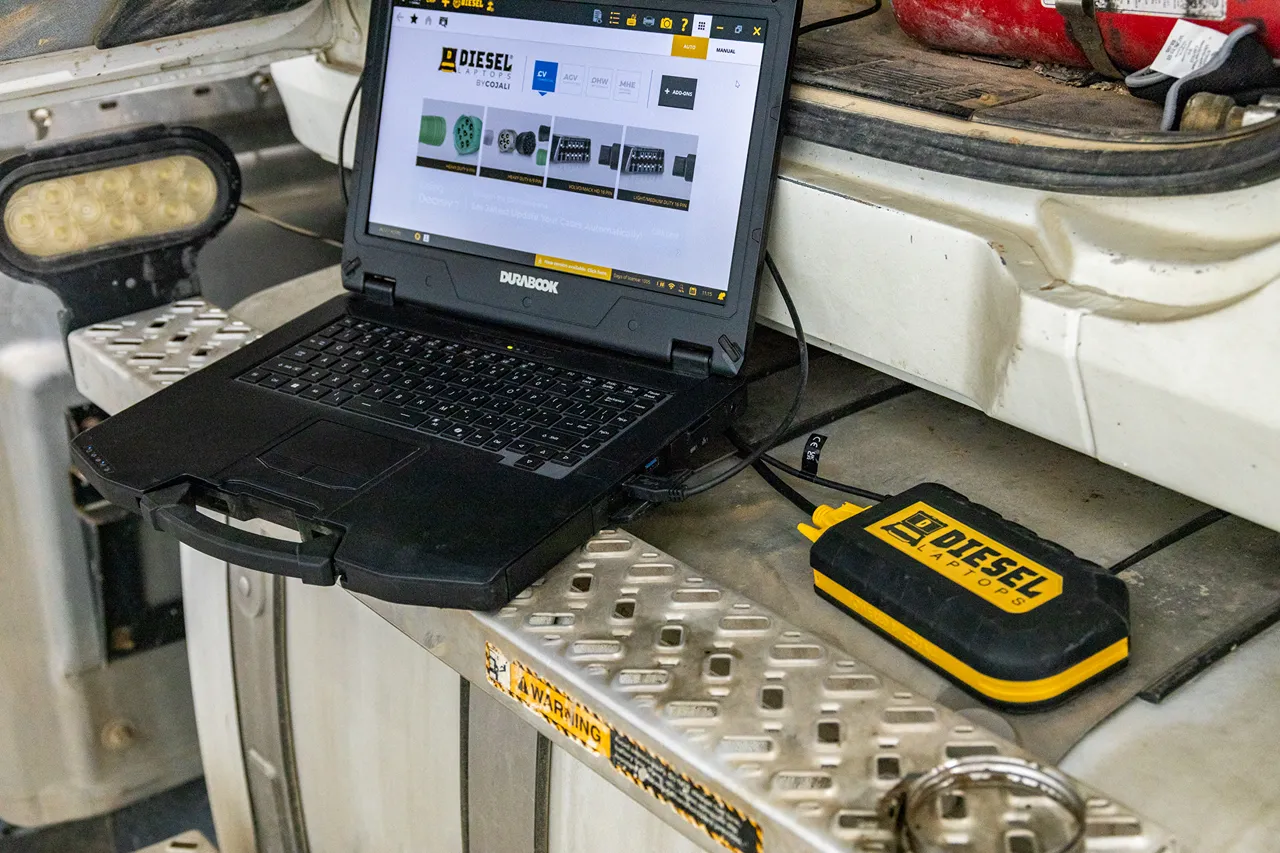
A thorough computer diagnostics process may include:
- Reviewing active, inactive, and stored fault information
- Comparing the driver's symptoms with fault history
- Monitoring live operating data
- Testing affected electrical and mechanical systems
- Checking sensors, wiring, connectors, and components
- Reviewing module communication and software when appropriate
- Confirming the repair before returning the truck to service
Think about a delivery truck making warehouse runs around Bedford Park. If it starts experiencing intermittent power loss near I-55, the code alone may not tell you whether you're dealing with fuel delivery, boost pressure, an aftertreatment condition, an electrical problem, or another system.
Testing narrows the field before somebody starts throwing parts at the truck.
Recurring Engine and Power-Loss Faults Need Investigation
A check-engine light that keeps coming back is telling you something, even when the truck still drives normally.
Pay particular attention when the light appears alongside sluggish acceleration, reduced pulling power, rough operation, inconsistent throttle response, or a fault that returns shortly after being cleared. Those symptoms can indicate a problem that changes with load, temperature, vibration, or operating conditions.
Chicago-area work trucks face plenty of those changing conditions. A regional truck may leave an industrial facility, crawl through local traffic, accelerate onto I-294, and settle into highway operation within a relatively short trip.
August can make marginal problems easier to notice, too. Long operating days, heavy HVAC demand, vibration, and high under-hood temperatures can expose weak electrical connections or charging-system issues that seemed less noticeable under lighter conditions.
Waiting for an intermittent fault to become constant usually gives your fleet fewer options.
Aftertreatment Warnings Can Lead to a Diesel Derate
Modern diesel aftertreatment systems work together to control emissions, and warning lights involving those systems deserve attention.
A DPF warning may indicate that soot loading or regeneration needs investigation. DEF/SCR faults, NOx sensor issues, exhaust-temperature sensor faults, and related conditions can also affect how the engine and emissions system operate.
The DPF captures diesel particulate matter and periodically uses regeneration to remove accumulated carbon. The SCR system uses diesel exhaust fluid as part of the process for reducing NOx emissions.
When an aftertreatment problem progresses far enough, the truck may enter a diesel derate that limits available power.
That's inconvenient in the yard. It's a much bigger operational problem when your driver is already moving through I-55 traffic or approaching the heavily travelled I-290 and I-294 corridor.
Watch for:
- DPF or emissions warning lamps
- Repeated or interrupted regenerations
- Increasingly frequent regeneration requests
- DEF-related warnings
- NOx or exhaust-temperature sensor codes
- Reduced engine power
- Messages indicating an approaching derate
Addressing those warnings early gives technicians more opportunity to diagnose the cause while the truck still arrives under its own power.
Why Electrical Faults and ABS Warnings Aren't Always Constant
Electrical problems have a knack for disappearing just when you want somebody to see them.
An intermittent sensor signal, weak connector, damaged wire, charging problem, or low-voltage condition can trigger a warning one moment and disappear the next. Modern trucks also rely on electronic controllers that communicate with one another, so a communication fault can sometimes produce symptoms in more than one system.
That is why replacing the first sensor named in a code isn't always the right move.
Suppose a work truck operating around North Avenue in Melrose Park develops an ABS warning that disappears after the driver restarts the vehicle. Proper ABS diagnostics can use stored fault information and electrical testing to investigate possibilities such as a wheel-speed sensor, connector, wiring fault, or communication issue.
Electronic diagnosis should also be kept separate from the truck's physical brake inspection. An ABS warning may involve electronic controls, while the mechanical braking system still requires its own inspection of components and condition.
For trucks working North Avenue, Mannheim Road, and nearby industrial routes, repeated acceleration, braking, vibration, and local-to-highway transitions can make intermittent faults especially frustrating. If the warning keeps returning, document when it happens and get it checked.
When ECM Programming or Truck Software Needs Attention
Today's heavy-duty trucks depend on electronic control modules for far more than displaying warning lights. Control modules help manage engine operation and other electronically controlled systems throughout the vehicle.
Sometimes a diagnostic investigation needs to include calibration, controller communication, ECM programming, or available software updates. Other times, the software is functioning correctly and testing points to a physical component, wiring issue, sensor, or mechanical condition instead.
That's an important distinction.
A proper diagnostic process should determine whether the fault is mechanical, electrical, electronic, or software-related before deciding what needs to change. Not every warning means your truck needs software updates, just as not every fault code means the component named in the code needs replacement.
This broader approach matters when several controllers appear to be involved or when a fault persists despite an earlier repair.
Why Chicago-Area Fleets Benefit From Diagnosing Problems Early
Downtime hurts anywhere, but congested freight routes give small problems an opportunity to become expensive ones.
A truck that shows an early aftertreatment warning in a Bedford Park yard is still somewhere your fleet can control the next move. If the same truck is allowed to operate until it reaches reduced power on I-55, your options shrink quickly.
The same principle applies around Melrose Park. An intermittent ABS or electrical warning near North Avenue is easier to investigate before the truck heads toward I-290 or I-294 and the fault becomes more disruptive.
Early diagnosis can help your fleet:
- Schedule service instead of reacting to a roadside event
- Give technicians useful fault history before codes change or multiply
- Reduce unnecessary parts replacement
- Identify voltage and communication problems before they affect other systems
- Address aftertreatment faults before a severe derate develops
- Keep busy work trucks available during high-utilization periods
Preventive maintenance already works on the idea that potential failures are cheaper to address before they become breakdowns. Computer diagnostics applies the same thinking to electronically monitored systems.
Get Chicago-Area Truck Warnings Checked Before They Escalate
Recurring warning lights, unexplained power loss, aftertreatment messages, ABS faults, and communication errors aren't problems you want to gamble on when your trucks spend their days between warehouses, industrial streets, and Chicago's busiest freight corridors.
If a warning keeps returning or your truck isn't operating normally, schedule diagnostics before a manageable problem turns into unscheduled downtime on I-55, I-294, or I-290. Get in touch with our team via our Contact Page today.
Frequently Asked Questions About Truck Diagnostics
What does a truck fault code actually tell you?
A fault code identifies the system or operating condition in which the truck detected a problem. It gives a technician a diagnostic starting point, but additional testing may be necessary to determine the actual cause before replacing components.
Can an aftertreatment warning cause a truck to lose power?
Yes. Certain unresolved DPF, DEF, SCR, sensor, or related emissions-system faults can eventually result in reduced engine power or a diesel derate. The exact response depends on the truck, fault, and operating conditions.
Why does my truck's warning light disappear after restarting?
Some intermittent electrical faults, sensor problems, voltage conditions, or communication errors may stop presenting symptoms temporarily after a restart. Stored diagnostic information can still help a technician investigate what happened.
Does every ECM fault require a software update?
No. An ECM or communication-related fault can involve software, calibration, wiring, power supply, connectors, sensors, another controller, or a failed component. Diagnostics should identify the cause before software updates or component replacement are recommended.
Should an ABS warning be diagnosed if the brakes still work?
Yes. An ABS warning indicates that the anti-lock braking system has detected a fault. ABS diagnostics can help identify electronic issues such as sensor, wiring, connector, or communication problems, while the mechanical brake system should be inspected separately when necessary.
.svg)
.svg)
.svg)