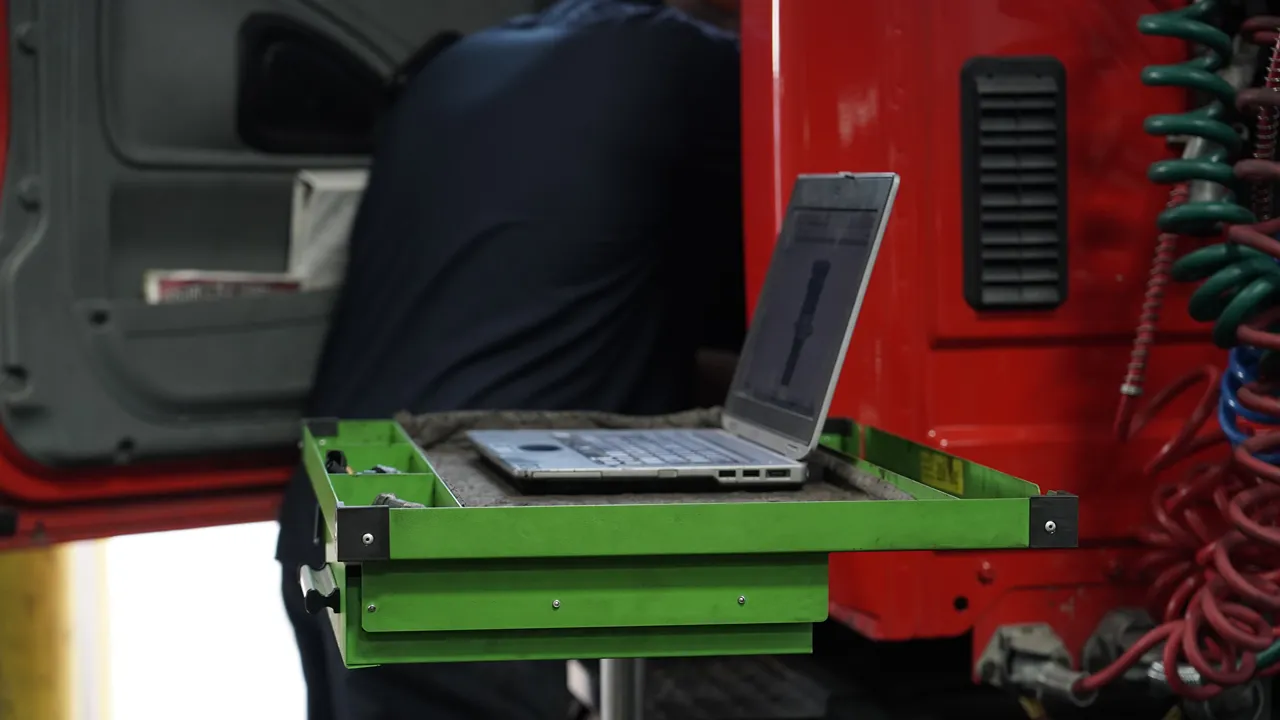
Your delivery truck cranks slowly after sitting overnight near Melrose Park's North Avenue industrial corridor, putting its morning schedule at risk. The problem might not be the cold itself; a weak battery, inaccurate temperature sensor, or electronic fault could be responsible. Commercial truck computer diagnostic services help identify these issues before colder temperatures turn a sluggish start into an unexpected breakdown.
Why Do Colder Temperatures Make Commercial Diesel Trucks Harder to Start?
Cold weather reduces battery performance while making diesel engines more demanding to crank. Engine oil becomes thicker, increasing resistance, and lower combustion temperatures can make ignition more difficult.
For Melrose Park fleet operators, October provides an opportunity to catch these problems before winter arrives.
According to the National Weather Service's 1991–2020 Chicago O'Hare climate normals, average overnight lows decrease from 45.4°F in October to 34.1°F in November and 24.4°F in December.
That seasonal drop makes commercial fleet winter preparation particularly important for trucks parked outdoors overnight.
Medium-duty box trucks, delivery vehicles, and heavy-duty tractors serving Mannheim Road and North Avenue depend on reliable starting systems. A truck that struggles to start can delay deliveries, disrupt warehouse schedules, and create avoidable downtime.
Professional diesel truck cold-start diagnostics allow technicians to evaluate electrical performance and engine operating data rather than relying on guesswork.
How Can Battery and Charging-System Diagnostics Prevent Cold-Start Failures?
Your batteries might start your truck perfectly during warm afternoons but struggle after a chilly night. That's because colder temperatures reduce available battery power precisely when your diesel engine needs more cranking effort.
Heavy-duty truck battery diagnostics help determine whether batteries, cables, starters, or charging components are responsible for unreliable starting.
Battery Load Testing and Cranking Voltage
A resting battery voltage reading doesn't tell the whole story. A battery can show an acceptable open-circuit voltage yet fail to deliver sufficient current under the heavy electrical load of a diesel starter.
Technicians use battery testing equipment to assess battery condition and available starting capacity. They also monitor voltage while the starter operates to identify excessive voltage drops.
For trucks equipped with multiple batteries, each battery should be evaluated according to the manufacturer's testing procedures.
Battery Connections and Alternator Performance
Loose terminals, corrosion, and damaged cables can restrict electrical current even when the batteries themselves are healthy.
Professional diesel charging system diagnostics typically include:
- Battery condition: Testing starting capacity and identifying weak batteries.
- Cable voltage drop: Checking positive and ground circuits for excessive electrical resistance.
- Terminal condition: Inspecting connections for looseness, corrosion, and physical damage.
- Alternator output: Verifying that the charging system operates within manufacturer specifications.
- Starter performance: Measuring cranking voltage and electrical demand to identify potential starter problems.
These checks are especially useful for local delivery trucks that make frequent stops or operate on shorter routes. Repeated starts, extended accessory use, and limited charging time can leave batteries undercharged.
An electrical inspection before colder weather helps prevent morning failures without replacing components unnecessarily.
How Do Faulty Temperature Sensors Affect Diesel Cold Starts?
Your truck's engine control module depends on accurate sensor readings to determine how the engine should operate.
Two particularly important inputs are the engine coolant temperature sensor and intake air temperature sensor.
Engine Coolant Temperature Sensor Diagnostics
The engine coolant temperature sensor reports engine temperature to the ECM. Depending on the engine design, the ECM uses this information to adjust fuel delivery, starting-aid operation, and other cold-start strategies.
If the sensor incorrectly reports that a cold engine is already warm, the ECM may not apply the appropriate starting adjustments.
Professional commercial truck sensor diagnostics can compare coolant temperature readings with actual engine conditions.
After an engine has been parked long enough to reach ambient temperature, technicians can compare relevant sensor readings against surrounding conditions and manufacturer specifications.
Intake Air Temperature Sensor Diagnostics
The intake air temperature sensor measures the temperature of air entering the engine.
Incorrect readings can affect fuel-management calculations and cold-start control strategies, depending on the engine.
For example, a sensor reporting unusually warm intake air during a cold morning may provide misleading information to the ECM.
Technicians use diagnostic equipment to monitor live sensor data, identify implausible readings, and check associated wiring and connectors.
They may also inspect glow plug and intake air heater systems when the engine uses these starting aids. Not every diesel engine uses the same heating technology, so testing must follow the appropriate engine-specific procedure.
What Can ECM Diagnostics Reveal About Hard-Starting Commercial Trucks?
The engine control module coordinates numerous functions required for diesel starting and operation. It receives sensor information, controls fuel-related systems, and monitors electronic components for faults.
When a commercial truck becomes difficult to start, diesel ECM diagnostics Melrose Park services help technicians investigate electronic problems that might otherwise go unnoticed.
Diagnostic Trouble Codes and ECM Communication
Professional diagnostic software retrieves stored and active diagnostic trouble codes from the vehicle's electronic control systems.
These codes can point technicians toward problems involving temperature sensors, starting-aid circuits, fuel-pressure controls, or communication networks.
However, a fault code identifies a condition detected by the system, not necessarily the failed component.
For example, a temperature sensor code could indicate a defective sensor, damaged wiring, or an electrical connection problem.
Technicians should verify the cause through targeted testing before recommending repairs.
ECM Power Supply and Software Verification
An ECM also requires stable electrical power and reliable ground connections.
Low voltage during cranking can interrupt module operation or communication and contribute to starting problems. Testing battery supply, grounds, connectors, and voltage stability helps rule out these issues.
Technicians may also check whether applicable manufacturer diesel truck software updates address a known operating concern.
An ECM software update isn't automatically the solution to a hard-starting engine. Software changes should only be performed when appropriate for the vehicle and supported by manufacturer guidance.
How Do Technicians Distinguish Electrical Faults From Fuel-System Problems?
Not every diesel cold-start problem originates in the battery, sensors, or ECM.
A worn starter, inadequate fuel delivery, or engine mechanical issue can produce similar symptoms.
During professional diesel engine troubleshooting, technicians monitor cranking speed, available voltage, and fuel-pressure readings where the engine supports those measurements.
If engine RPM remains below the manufacturer's required cranking speed, the technician may investigate battery performance, starter operation, or mechanical resistance.
If cranking speed is acceptable but fuel pressure fails to reach the specified level, the investigation may shift toward the fuel supply system.
Comparing these measurements helps prevent unnecessary ECM or sensor replacements.
What Should Melrose Park Fleet Owners Include in an October Diagnostic Checklist?
A scheduled preventive fleet maintenance inspection gives your operation an opportunity to address developing problems before colder mornings affect dispatch reliability.
For warehouse vehicles, industrial supply trucks, and regional freight fleets, prioritize these checks:
- Test batteries under load. Identify weak or undercharged batteries before temperatures decline.
- Inspect starting and charging circuits. Check terminals, cable resistance, alternator output, and cranking performance.
- Verify temperature sensor accuracy. Compare coolant and intake air temperature readings with actual conditions.
- Review ECM faults and communication. Retrieve trouble codes and investigate relevant power, ground, and network problems.
- Inspect starting aids and fuel delivery. Test applicable heating systems, cranking speed, and fuel-pressure performance.
Document completed inspections, findings, and repairs in your fleet maintenance records.
Illinois incorporates federal commercial vehicle inspection, repair, and maintenance requirements under 49 CFR Part 396, with state-specific provisions. Seasonal diagnostics support your maintenance program but aren't a separate mandatory October ECM inspection.
For fleets traveling between Melrose Park facilities and regional destinations through I-290 and I-294, completing these checks before winter can reduce avoidable dispatch interruptions.
Schedule Commercial Truck Computer Diagnostics in Melrose Park, IL
October is an ideal time to address weak batteries, inaccurate sensors, and ECM-related faults before colder mornings make starting problems more noticeable.
Fleet Master Truck & Trailer Repair provides commercial truck computer diagnostics and diesel repair services for fleet operators in Melrose Park and the surrounding Chicago area.
Whether you operate local delivery trucks along North Avenue or heavy-duty tractors serving regional freight routes, proactive testing helps protect your schedules and reduce unexpected downtime.
Contact Fleet Master Truck & Trailer Repair at 331-243-7877 to schedule diagnostics at 4825 W Lake St, Melrose Park, IL, and prepare your commercial trucks for colder starts.
FAQs
Why do diesel trucks become harder to start in cold weather?
Cold temperatures reduce available battery power, increase engine oil resistance, and make diesel combustion more difficult during starting. Weak batteries, inadequate cranking speed, faulty sensors, and starting-aid problems can make these conditions worse.
Can a faulty temperature sensor prevent a diesel truck from starting?
Yes. An inaccurate coolant or intake air temperature sensor can cause the ECM to apply inappropriate cold-start adjustments. The effect depends on the engine's control strategy and the severity of the sensor fault.
Can ECM diagnostics identify a weak truck battery?
ECM diagnostics can reveal low-voltage fault codes or unusual electrical readings, but dedicated battery and charging-system testing is necessary to confirm battery condition. Technicians typically use both approaches to identify the underlying problem.
Does a commercial diesel truck need an ECM software update before winter?
Not necessarily. ECM updates are appropriate when manufacturer guidance identifies a relevant software issue or calibration improvement. Routine winter preparation should prioritize battery condition, sensor accuracy, electrical connections, and verified fault diagnosis.
When should Melrose Park fleet operators schedule cold-start diagnostics?
October is a practical time to schedule diagnostics before colder November and December temperatures arrive. Trucks showing slow cranking, intermittent starting, unusual warning lights, or recurring electrical faults should be inspected sooner.


